

Fundraising is often described through numbers: how much money was raised, how many donors contributed, how quickly a campaign reached its goal.
Those numbers matter. Without funding, many social projects simply cannot move forward.
But community fundraising can create something that is harder to measure. A person who initially arrives to make a small donation may begin following the project, sharing updates, offering skills, joining activities, bringing friends, or helping with the next stage.
At that point, fundraising stops being only a financial mechanism. It becomes an entry point into participation.
For nonprofits and local initiatives, this shift can be just as important as reaching the original fundraising target. Money can solve an immediate need. An active community can help a project continue solving needs long afterward.
The problem: traditional fundraising can end at the transaction
The simplest fundraising journey is familiar.
A person sees a request, understands the need, makes a donation, receives a confirmation, and leaves.
The organization receives money. The supporter feels that they have helped. Technically, the interaction was successful.
But a valuable opportunity may have been lost.
The donor may never learn what happened next. They may not know whether the project reached its goal, what was purchased, what difficulties appeared, or whether another form of help was needed.
Several weeks later, the same organization may need volunteers, professional expertise, transportation, equipment, or help spreading information. Yet the people who already demonstrated that they care about the issue may never hear about those needs.
The relationship begins and ends with payment.
Community fundraising offers another model.
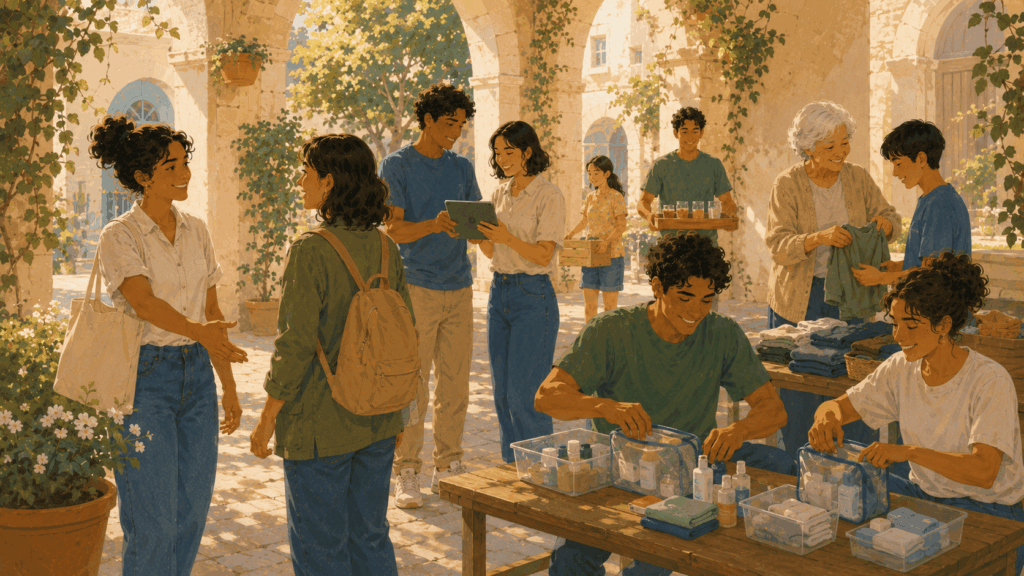
A donation can be the first action, not the final one
People rarely donate to social initiatives because they enjoy the act of transferring money itself.
They donate because something behind the campaign matters to them.
They want an animal rescue group to buy food and medicine. They want a neighborhood space to be repaired. They want educational activities to continue. They want equipment to reach the people who need it. They want a local idea to become possible.
The transaction is simply a way to participate in that desired outcome.
Recognizing this changes how organizations can think about donors.
Instead of treating them only as sources of funding, projects can treat them as people who have already expressed interest in the mission.
Some will want to donate and nothing more. That choice should always be respected.
Others may be ready to become more involved if the path is clear.
Community fundraising gives people something to follow
A strong crowdfunding for good campaign has a concrete goal.
That creates a natural story.
There is a starting point, a need, a target, progress, challenges, and eventually an outcome.
When supporters can follow those stages, fundraising becomes more engaging than a single appeal.
Imagine a community raising money to create a small shared workshop. At the beginning, supporters see the plan and budget. Later, they see that part of the funding has been collected. Then the project finds a suitable space. Equipment is purchased. Volunteers help prepare the room. The first community activity takes place.
A person who donated at the beginning can see the idea gradually becoming physical.
That visibility creates connection.
The supporter is no longer responding to an abstract request. They are watching something they helped make possible.
Progress can transform financial support into emotional ownership
People tend to care more about things they have contributed to.
The contribution does not need to be large.
A small donation can create a simple but powerful thought: I helped this happen.
That feeling becomes stronger when the result is visible.
If a supporter contributes toward restoring a neighborhood space and later sees photographs of people using it, the meaning of the donation changes. It is no longer just money that left their account. It has become part of a recognizable outcome.
This sense of ownership can encourage deeper community engagement.
The person may share the project because they want others to see its progress. They may respond to an update. They may contribute again. They may notice another need and realize they can help with it.
Community fundraising creates the first connection. Transparency and continued communication give that connection somewhere to grow.
Participation becomes stronger when projects reveal different needs
Money is essential, but social projects rarely need money alone.
A local event may need funding for equipment, but it also needs organizers and volunteers.
An animal rescue initiative may need donations for food and veterinary care, while also needing transportation, photography, communication, or help preparing adoption materials.
A community renovation project may raise enough money for supplies and still need people to assemble furniture, paint walls, transport materials, or document the result.
If supporters only see the financial goal, they may assume that donating is the only useful action available to them.
Showing the full picture creates more possibilities.
A project might need:
- financial contributions;
- volunteer time;
- professional expertise;
- equipment or materials;
- transportation;
- communication support;
- useful contacts;
- online research;
- help sharing verified information.
Suddenly, people who cannot donate also have a place in the project.
These ways to help without money make fundraising more inclusive and turn a financial campaign into a wider participation system.
Micro-volunteering creates an easy next step
There is often a large gap between "donor" and "volunteer."
Someone may be comfortable contributing a small amount but hesitate to join a formal volunteer team. They may not have enough time for regular shifts or may simply be unsure what volunteering would require.
Micro-volunteering can bridge that gap.
After supporting a campaign, someone might spend twenty minutes checking a translation, researching several suppliers, sharing information in a relevant community, proofreading an update, or helping organize a small amount of data.
These tasks are specific and limited.
That makes them easier to accept.
The person does not have to make a major commitment to become more involved. They simply complete one useful action.
For organizations, dozens of these small contributions can solve practical tasks that would otherwise accumulate around a small core team.
For supporters, they provide a new experience: instead of only financing the work, they become part of doing it.
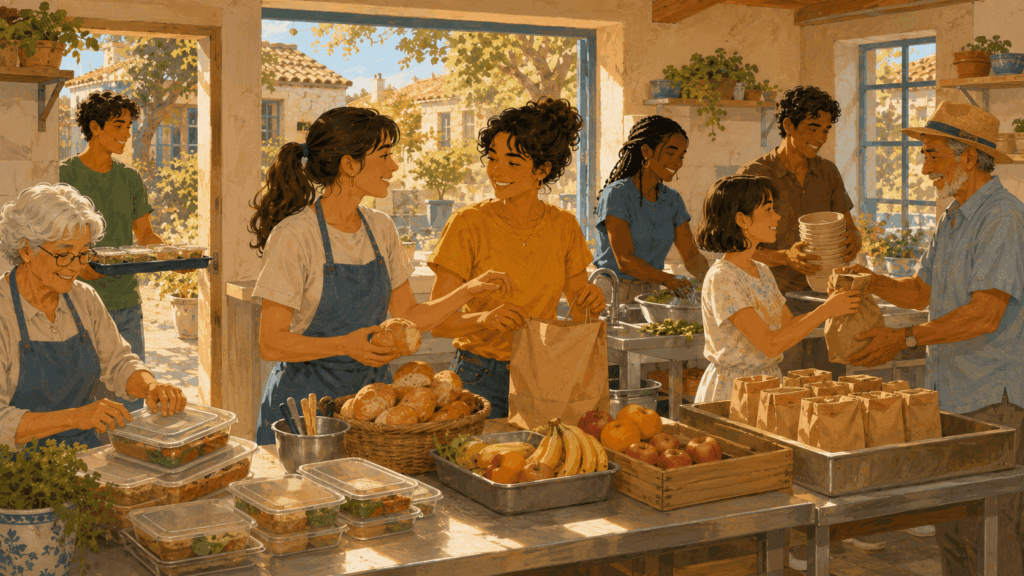
Online volunteering expands participation beyond the local area
Community fundraising does not have to mean that every participant lives in the same neighborhood.
A project can be deeply local while its network of supporters is much wider.
Someone living in another city may donate to a local initiative because they care about its mission. Later, they might discover that the project needs a task they can complete remotely.
This is where online volunteering becomes especially useful.
Design, translation, research, mentoring, communication, administrative support, fundraising materials, video editing, and many other activities do not necessarily require physical presence.
A supporter who cannot attend an event may still help prepare it.
Someone who cannot visit an animal rescue may contribute to animal shelter support by preparing adoption content or helping with digital communication.
Digital participation allows community to form around shared purpose rather than geography alone.
Updates should continue after the fundraising target is reached
One of the easiest ways to lose engagement is to disappear after collecting the money.
From the organizer's perspective, this often happens for understandable reasons. Once fundraising ends, the difficult work begins. Teams are purchasing supplies, coordinating logistics, managing volunteers, solving delays, and trying to deliver what they promised.
Communication can feel secondary.
For supporters, however, silence creates uncertainty.
They participated at the moment when the project needed something from them. Now they do not know what happened.
A short update can change that experience completely.
"The materials have been ordered."
"We reached the first stage."
"The event is scheduled."
"We encountered a delay and here is why."
"We still need three volunteers."
"The project is complete, and here is what your support helped create."
These messages turn transparency into an ongoing relationship.
They also create natural opportunities for people to participate again without immediately asking for another donation.
Community fundraising can distribute responsibility
When fundraising becomes participatory, the organizer no longer has to carry every part of the project alone.
One person may manage the budget. Another can coordinate volunteers. Someone can prepare updates. A supporter may introduce a useful partner. Several people can complete small digital tasks.
This does not mean leadership disappears.
It means the project gains more sources of capacity.
That matters particularly for grassroots initiatives, where one highly motivated person often becomes responsible for fundraising, logistics, communication, volunteer coordination, and reporting at the same time.
A community can help distribute some of that work.
And once people take responsibility for even a small part of the process, their relationship with the project often changes. They are no longer watching from outside.
They are helping build the result.
Digital tools can connect these different forms of support
For many nonprofits, participation is still fragmented.
Donations happen through one platform. Volunteer recruitment happens through social media. Tasks are distributed through private messages. Updates appear somewhere else. Community discussions move into several chats.
The supporter has to piece together the project themselves.
Thoughtful digital tools for nonprofits can reduce this friction.
Good nonprofit technology can help connect fundraising, volunteer opportunities, project information, progress updates, and community interaction.
This matters because participation rarely follows one fixed path.
Someone might discover a project, donate, follow an update, complete a small task, share the campaign, and return several months later.
Another person might begin with online volunteering and donate later.
The technology should allow these different forms of participation to support the same goal rather than treating each interaction as completely separate.
How Deya supports participation beyond the donation
Deya is designed around this broader understanding of social impact.
A project can present its goal, launch crowdfunding for good, communicate current needs, involve volunteers, share progress, and build a community around what it is trying to achieve.
For supporters, this creates multiple entry points.
A person may begin with a donation and later discover a micro-volunteering opportunity. Someone who cannot contribute financially may offer a skill instead. Another participant may follow the project, help spread information, join an offline activity, or support a future stage.
The contribution can change while the connection to the project remains.
For organizers, this creates an opportunity to build relationships rather than repeatedly starting from zero with every new campaign.
Deya does not make every donor a volunteer, nor should it. Instead, it gives people more opportunities to decide how involved they want to become.
Active communities are built through choice, not pressure
There is an important boundary here.
A person who donates does not owe a project additional work.
They should not immediately receive a series of demands to volunteer, share, recruit friends, and contribute again.
Community participation works best when people have choices.
The role of the project is to make those choices visible.
Here is what we are doing.
Here is what happened because people contributed.
Here is what we need next.
Here are several ways you can participate if you want to.
That approach respects individual capacity while keeping the door open.
Some people will remain occasional donors. Others will become volunteers. Some will offer professional skills. A few may eventually organize parts of the project themselves.
A healthy community has room for all of them.
Fundraising can create something that lasts beyond the campaign
Every crowdfunding campaign eventually ends.
The target is reached, partially reached, or replaced by a new stage.
But the network created around it does not have to disappear.
People who donated have already demonstrated something important: they cared enough to act.
When projects communicate clearly, show progress, offer different forms of participation, and continue the relationship after fundraising, that initial action can become the beginning of something larger.
A donor can become a follower.
A follower can become a volunteer.
A volunteer can contribute a skill.
A participant can bring another person.
Someone who once helped with a single task may eventually help shape the next project.
This is how community fundraising can produce more than financial resources.
It can create social capacity.
And for long-term social impact, that capacity may become one of the most valuable resources a project has.
Deya connects crowdfunding for good, online volunteering, micro-volunteering, and community engagement so that support does not have to end with a donation. It can become the first step toward meaningful participation.
Want your contribution to become part of something bigger? Explore Deya and find the way to participate that works for you.