

Most communities can easily describe what they believe in. They value mutual support, inclusion, responsibility, transparency, care, sustainability, or participation. These ideas appear in mission statements, project descriptions, fundraising campaigns, and conversations about social impact.
The harder question is what happens afterward.
A value becomes meaningful only when people can recognize it in ordinary behavior. "We support each other" means very little if asking for help feels uncomfortable. "Everyone can participate" loses its meaning if every volunteer opportunity requires hours of free time. "We believe in transparency" remains an abstract promise if supporters never learn what happened after a fundraising campaign.
Strong communities close the distance between what they say matters and what people actually experience. And that usually happens not through one dramatic action, but through dozens of small decisions repeated over time.
The problem: values are easy to declare and difficult to practice
Values are naturally abstract. Words such as trust, solidarity, inclusion, responsibility, and community can describe an intention, but they do not automatically tell people what to do.
Consider a local initiative that says it values participation. Does that mean residents can suggest ideas? Can they help make decisions? Are there small volunteer tasks for people with limited time? Can someone participate remotely? Will organizers respond to feedback?
Without practical answers, "participation" remains a concept rather than an experience.
The same problem appears across nonprofits and volunteer communities. Organizations may sincerely believe in accessibility while unintentionally creating complicated entry processes. They may value volunteers while repeatedly relying on the same people until they become exhausted. They may believe in transparency while communicating only when another donation is needed.
Usually, the gap is not created intentionally. It appears because daily work is busy, resources are limited, and immediate tasks take priority.
But communities are shaped by those everyday decisions.
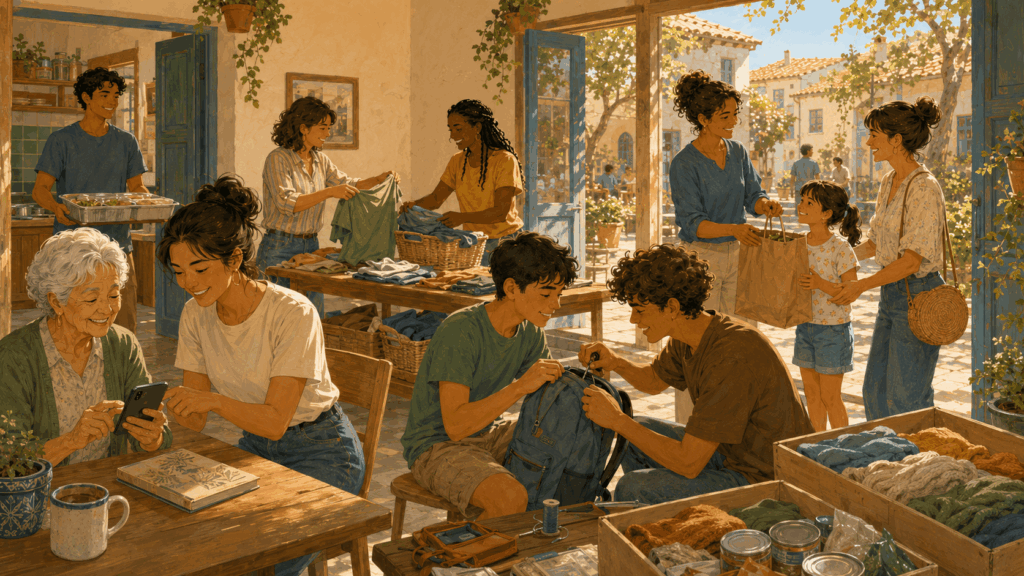
People learn community values by watching what happens
Formal statements tell people what an organization wants to represent. Behavior tells them what it actually rewards.
Imagine a new volunteer makes a mistake during their first task. If the response is patient and practical, the person learns that the community allows people to learn. If the response is dismissive, they learn something different, regardless of what the organization's values page says.
The same is true when someone offers an idea, asks where donations went, cannot attend an activity, or says they do not have enough time for a large volunteer role.
Every response communicates a norm.
Over time, those norms become culture.
This is why community building cannot be separated from ordinary interactions. The strongest values are often communicated without anyone naming them directly.
Mutual support becomes real when asking for help feels normal
Many communities are good at celebrating people who help others. Fewer are equally good at creating an environment where people feel comfortable saying that they need help themselves.
Yet mutual support requires both.
If everyone wants to appear capable and independent, needs remain invisible until they become urgent. A volunteer struggles with too many responsibilities but does not say anything. An organizer tries to manage fundraising, communication, and logistics alone. A community member has a useful idea but assumes nobody wants to hear it.
A healthier norm is created when asking becomes ordinary.
"I cannot complete this task. Can someone take it?"
"We still need transportation."
"We do not know how to solve this technical problem."
"We reached part of the goal, but this stage needs additional support."
These statements do not weaken a project. They create opportunities for participation.
Once people see that needs can be expressed clearly without embarrassment, they become more likely to express their own needs and respond to those of others.
Inclusion appears in the number of realistic ways people can participate
A community can say that everyone is welcome while offering only one way to contribute.
That creates a contradiction.
People have different schedules, financial situations, physical abilities, professional skills, locations, and levels of energy. A participation model designed for one type of person will inevitably leave others outside.
This is why practical inclusion often means offering different entry points.
Someone may contribute through crowdfunding for good. Another person may volunteer at an event. Someone with limited time may complete a micro-volunteering task. A person living elsewhere may participate through online volunteering. Another supporter may provide equipment, professional expertise, useful information, or a relevant introduction.
These ways to help without money are important because they communicate something deeper than flexibility: the community recognizes different kinds of value.
People do not need identical resources to contribute to the same outcome.
Responsibility becomes a habit through small actions
Shared responsibility sounds like a large principle, but communities usually build it through very ordinary behavior.
Someone notices that information is outdated and updates it. A volunteer sees a newcomer and explains how things work. A participant brings back borrowed equipment without being reminded. Someone who cannot complete a task tells the team early enough for another person to take it.
None of these actions would normally appear in a social impact report.
Yet together they determine whether a community can function without constant supervision.
This is an important stage in community engagement. People stop waiting for one organizer to notice every problem, distribute every task, and provide every answer.
They begin looking around and asking, "What can I take responsibility for?"
That does not mean everyone becomes equally involved. It means responsibility is no longer concentrated entirely in the center.
Transparency is built between fundraising campaigns
Transparency is often associated with financial reporting. That is essential, particularly in crowdfunding for good, but communities experience transparency more broadly.
They notice whether organizers communicate when plans change. They notice whether delays are explained. They notice whether completed stages are shown, whether unsuccessful attempts are acknowledged, and whether questions receive clear answers.
Most importantly, they notice whether communication continues after the organization has received what it asked for.
If supporters hear from a project only when another donation is needed, transparency begins to feel transactional.
Regular updates create a different relationship.
"The materials arrived."
"We completed the first stage."
"This part took longer than expected."
"Here is what volunteers finished."
"This is what we need next."
Small updates make the process visible. Over time, visibility creates trust.
Care includes respecting people's limits
Communities built around good causes can unintentionally create unhealthy expectations.
When the mission feels important, it becomes easy to believe that everyone should always do a little more. Stay another hour. Take one more task. Answer one more message. Join one more campaign.
But a community cannot claim to value care while exhausting the people who provide it.
Respecting limits is part of the value itself.
A volunteer should be able to decline a task without needing to justify themselves. Someone should be able to participate occasionally without being treated as less committed. People should be able to step away and return later.
This is where micro-volunteering can be especially useful. Smaller tasks allow people to contribute according to their current capacity instead of choosing between a major commitment and no participation at all.
Sustainable social impact depends on making room for different levels of involvement.
Digital behavior also shapes community culture
As more participation moves online, community values are increasingly expressed through digital experiences.
How difficult is it to find a volunteer opportunity? How quickly can someone understand a project's goal? Are instructions clear? Can a person see what has already been achieved? Is it obvious how to contribute without donating?
These questions may sound technical, but they influence human behavior.
Good digital tools for nonprofits can make participation easier by reducing unnecessary steps and making information more visible. Poorly designed systems can create frustration even when the organization itself has good intentions.
This is why nonprofit technology should support the culture a community wants to build.
If accessibility matters, the digital path to participation should be simple. If transparency matters, progress should be visible. If shared responsibility matters, people should be able to discover concrete tasks rather than waiting for organizers to contact them personally.
Technology becomes part of how values are experienced.
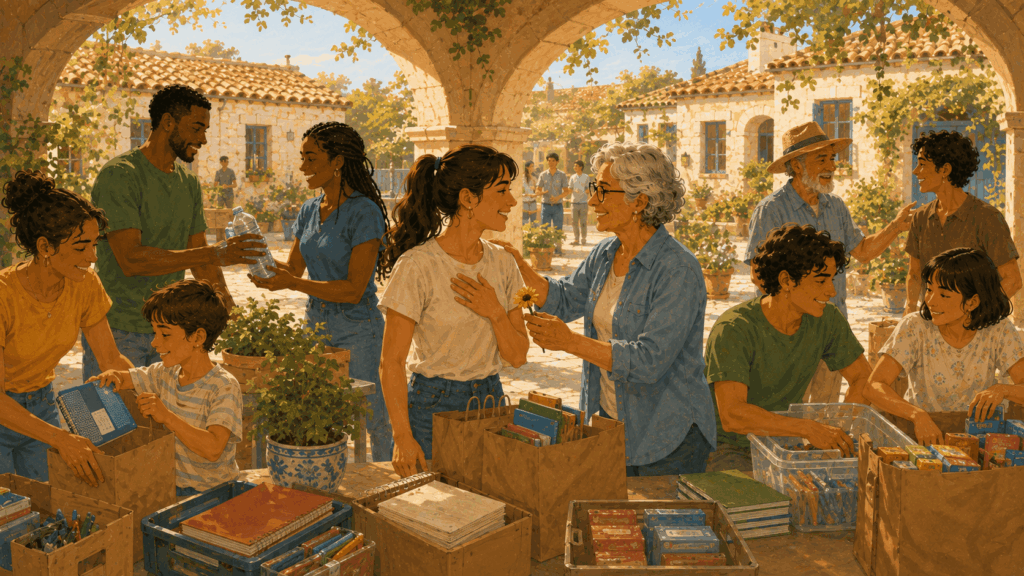
Online volunteering can turn expertise into everyday support
Communities also become stronger when people learn to recognize skills as resources.
Someone may not think of themselves as a volunteer because they cannot attend local activities. Yet they may know how to translate, design, edit video, write, research, mentor, organize information, or solve a technical problem.
Online volunteering makes those contributions easier to integrate into everyday community work.
A local initiative might need someone to check a document. An animal rescue may need help preparing adoption materials. A community fundraiser might need a visual. A small nonprofit may need research that would take its team several hours.
These tasks can often be completed remotely and without a long-term commitment.
When communities routinely identify and share such needs, helping becomes less dependent on formal volunteer roles. People begin noticing that many ordinary skills can create useful social impact.
Recognition teaches people which behaviors matter
Communities repeat what they notice and value.
If only large donations receive attention, people may assume money is the most meaningful contribution. If only the most active volunteers are recognized, occasional participants may feel invisible.
Recognition does not need to mean awards or public praise.
Sometimes it simply means showing how different contributions helped.
A short update might explain that volunteers translated materials, someone provided transportation, community members helped spread information, and donations covered necessary supplies.
This creates a fuller picture of how the result was achieved.
It also teaches people what participation can look like.
Someone reading that update may realize, "I cannot donate right now, but I could help with something like that."
Recognition therefore does more than thank existing participants. It helps future participants imagine a role for themselves.
Repetition turns individual actions into community norms
One helpful action does not create a culture.
Repeated behavior does.
If one organizer shares a detailed update once, that is good communication. If projects consistently explain progress, transparency becomes expected.
If one volunteer helps a newcomer, that is kindness. If people routinely welcome and guide new participants, inclusion becomes part of the culture.
If someone asks for help once, that is a request. If people regularly express needs and others respond without judgment, mutual support becomes normal.
This is how values move from language into behavior.
People observe what happens repeatedly and adjust their own actions accordingly.
Eventually, nobody needs to explain every norm explicitly. New participants learn by watching the community itself.
How Deya can help make values visible through action
Deya creates an environment where different forms of participation can exist around the same social goal.
A project can explain its purpose, launch crowdfunding, identify volunteer needs, share updates, invite people into activities, and build a community around its progress.
That structure can help organizations translate abstract values into practical opportunities.
If a project values accessibility, it can offer different ways to participate. If it values transparency, updates can show what has happened after people contributed. If it values shared responsibility, volunteer and micro-volunteering opportunities can make current needs visible.
Someone may donate. Another person may offer a skill. Someone else may participate through online volunteering, help locally, share information, or simply follow the project until they find a moment when they can contribute.
Different actions can still express the same shared values.
Deya does not create a community's culture for it. That culture comes from people. But digital infrastructure can make it easier for those people to act according to the principles they say matter.
Values become powerful when they become ordinary
The strongest sign that a community truly values mutual support is not a statement about mutual support. It is seeing someone ask for help and watching others respond.
The strongest sign of transparency is not the word "transparent" in a project description. It is knowing what happened after people contributed.
The strongest sign of inclusion is not saying everyone is welcome. It is seeing people with different amounts of time, money, skills, and experience finding meaningful ways to participate.
And the strongest sign of shared responsibility is not asking everyone to do more. It is seeing people naturally begin to carry different parts of a common goal.
This is how communities turn values into culture: through small actions that become normal enough to repeat.
Over time, those ordinary behaviors shape how people communicate, collaborate, solve problems, and respond when someone needs support. They make participation easier for the next person and reduce the distance between caring about a problem and doing something about it.
That is where values become more than ideals.
They become infrastructure for collective action.
Deya helps connect crowdfunding for good, online volunteering, micro-volunteering, project progress, and community engagement so that shared values can become visible through everyday participation.
Want your energy, skills, or support to create a real result? Explore Deya and find a way to take part.